The Cost of Art
Looking at the painting in front of me I sight in frustration. Sometimes this happens, I will have two or three paintings in a row that just don’t work. Somehow that fusion of energy where each ingredient finds its place and suddenly settles isn’t happening. The elements of water, pigment, brush, subject and artist have clogged each other up. The paintings have going from living to over-worked, from energetic to too static. A flying bird becomes a thing that simply hangs too heavily in the air. The poetry is gone.
I lay down my brush philosophically. This can happen, and whilst it feels like a waste of time and resources in the short term - the hours spent, the materials used, the vision of a composition that might never survive the mess - I know that the long-term will yield something else. This frustration and these mistakes will make me up my game. They will stoke a fire in me.
Every finished painting stands on the shoulders of countless others that never left the studio.
My art will improve as a result of this.
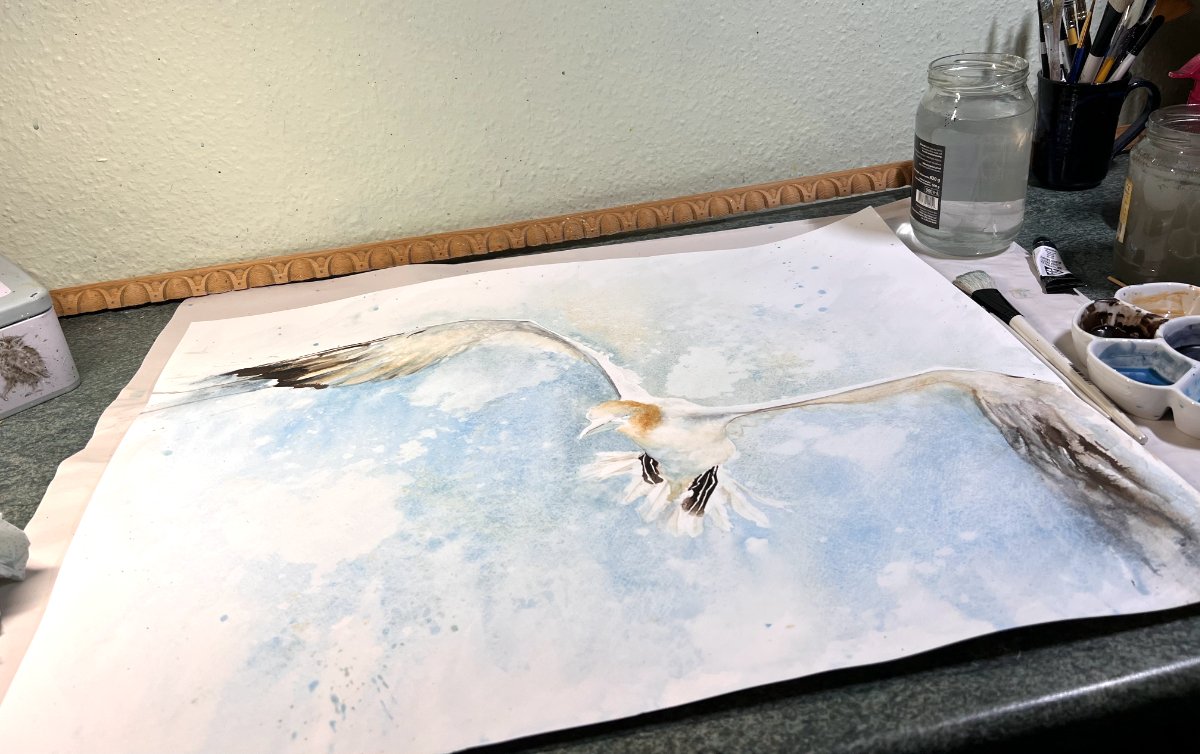
Gannet painting in process
ON THE OTHER SIDE OF THE EASEL
As I put my paints away for the day and begin to do a deep clean of my work area, I am reminded of the question I sometimes hear people ask: why does original art cost what it does? In many ways it’s a fair question and I remember a time when I used to ask it too. Today’s experience, however, makes me smile wryly. It’s only when you have spent time on the other side of the easel that you realise that much of what goes into creating and bringing a painting to life remains invisible.
Put together the visible and the invisible, though, and you start to understand what you are really paying for.
WHAT DO YOU ACTUALLY PAY FOR?
The visible costs of a painting are obvious to everyone: paper and paints, brushes and framing, mounts, glass, prints, specialist packaging material, and postage. These are the building blocks of that final piece, beautifully presented and delivered - the things you can touch and see.
Behind these sit the ordinary costs of running a business. Some are common to almost every profession: a website, insurance, accounting, payment processing, travel and the cost of premises. Others belong more specifically to the business of art: exhibition commission, submission and hanging fees, professional photography and the scanning of paintings for archival prints.
And then there are the invisible costs. These are less tangible, yet they are what breathe life into the materials - the prima materia: the years the artist has been painting, honing their skills all the way; the hundreds of both failed and successful paintings; the hours of filling sketchbooks, working things out, perfecting a particular skill or technique; the time spent developing an artistic voice; and the time involved in researching subjects, doing fieldwork and (for a wildlife artist) observing wildlife.
It’s easy to forget that the resulting painting has to encompass these costs.
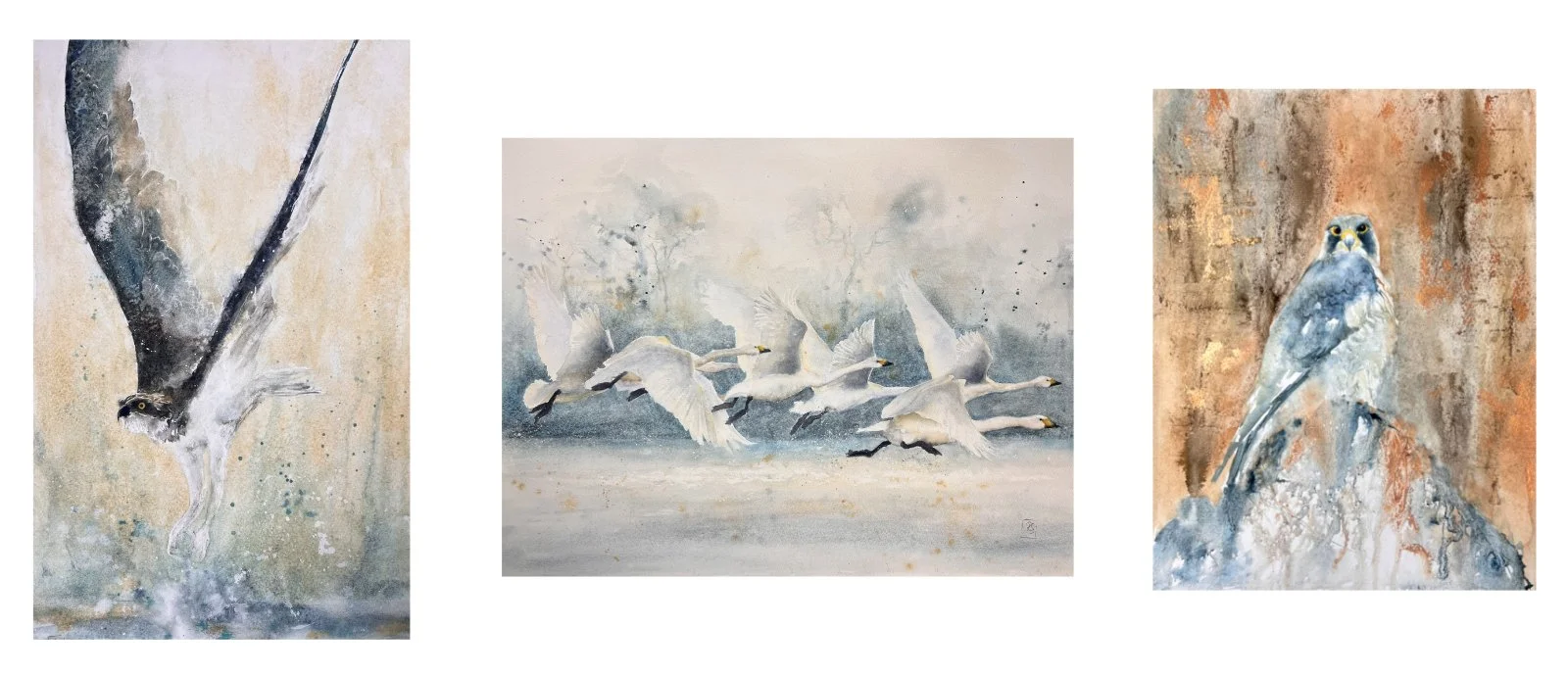
These three paintings recently sold at exhibition. It is always absolutely thrilling for an artist when a piece goes to its new home.
THE TRUE VALUE
There’s more to it though.
When someone buys a painting they aren't buying paper and pigment; they’re actually supporting everything that made that painting possible.
The finished painting carries an energy that many people instinctively recognise. It is why an original feels different from a print, and why we tend to respond to each in very different ways.
An original painting holds something ineffable. It is imbued with the spirit of the artist: their attention, their passion, their vision. It is a caught conversation between subject and artist—a moment of creative time that the person buying the painting somehow gets to step into and make part of their own life. In many ways, it is priceless: unrepeatable, unmistakable and utterly unique.
This is why art costs what it does.
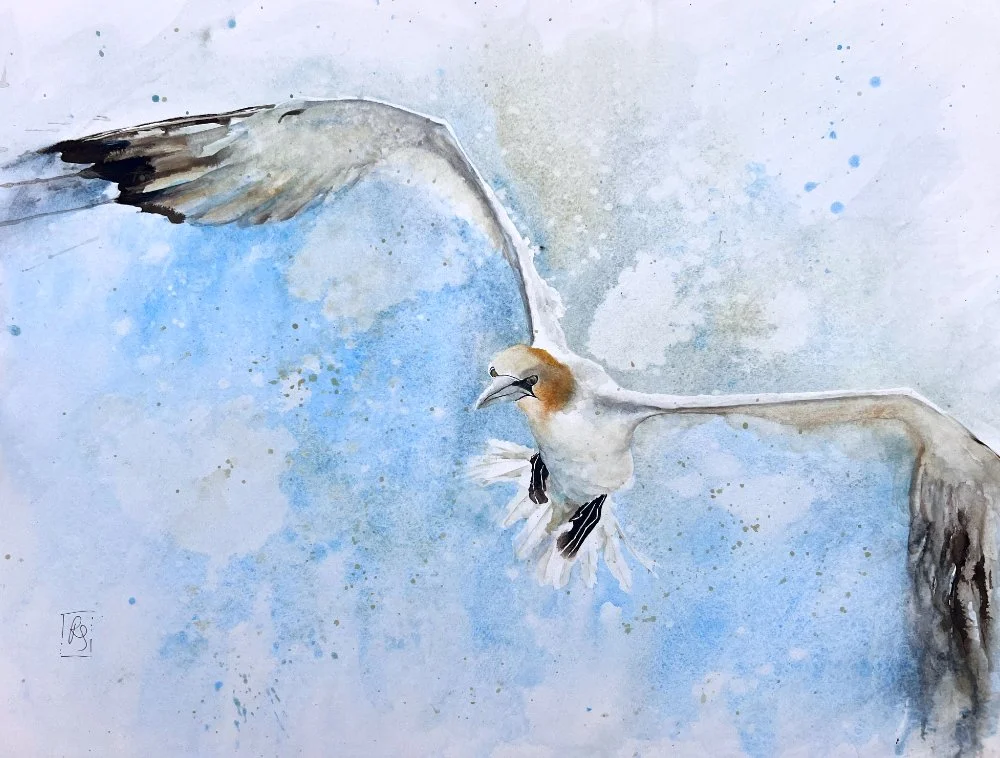
‘Summer Skies’ - Northern Gannet